
Battle royale: how the genre was born and why it's still dominant
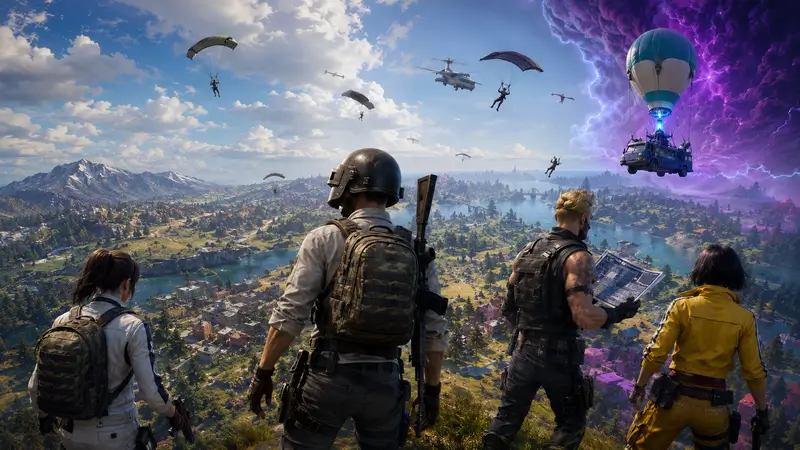
Free Fire and Fortnite, two of the games in our network, belong to a genre that only became "huge" a little over a decade ago — but the roots of battle royale are older than they seem.
From Japanese film to game mod
The term "battle royale" comes from the Japanese film Battle Royale (2000), about students forced to fight each other until only one remains. The game mechanic — many players, a shrinking area, only one winner — first appeared as a mod for ARMA 2 and ARMA 3, created by Brendan Greene (known as "PlayerUnknown"), before becoming the standalone game PlayerUnknown's Battlegrounds (PUBG) in 2017.
The genre's explosion
PUBG's success was quick, but it was Fortnite Battle Royale (launched as a free mode in 2017) that pushed the genre into the mainstream, blending the formula with structure building and a more casual aesthetic. Mobile games like Free Fire (2017) brought the genre to lower-resource phones, expanding the audience in markets where high-end PC/console gaming isn't accessible.
Why the format still works
- Rising tension: the shrinking area forces confrontations, so no match ever stays "idle"
- Every match tells a different story — the same map creates new situations depending on where you land and who you run into
- It works well both solo and in squads, which broadens the audience
- Relatively short match cycle compared to other competitive multiplayer games, which makes it easy to fit in "just one more"
Almost 10 years after PUBG, the genre keeps reinventing itself — live events, crossovers, new modes within the classic battle royale — but the base formula is still the one that went viral in 2017.